
Automated image analysis is the biggest change to X-ray screening since dual energy. Here's what it actually does, where it earns its keep, and how to add it without replacing a single machine.
What AI Screening Actually Does
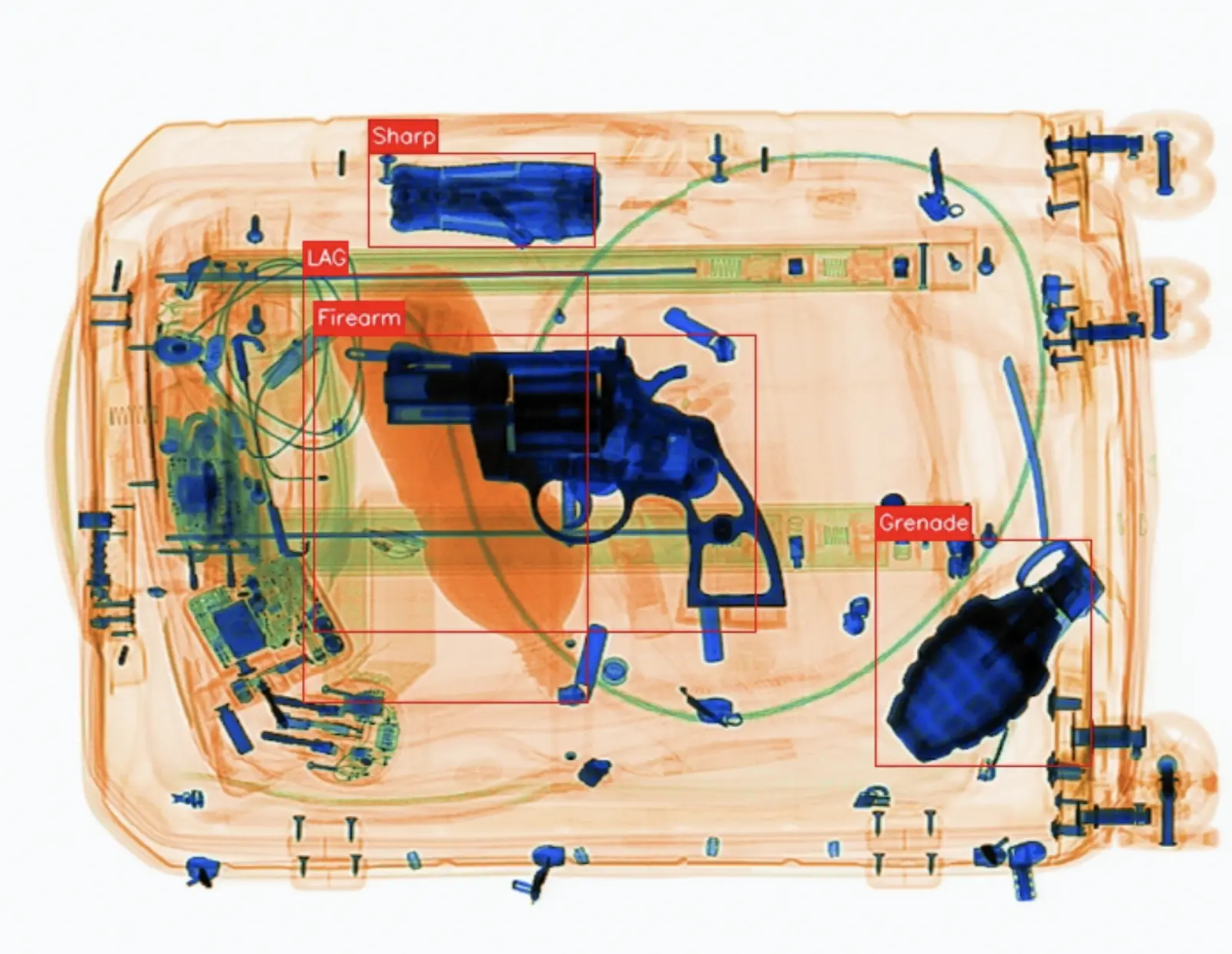
A human screener looks at an X-ray image and decides whether anything in the bag is a threat. AI weapons detection does the same job in parallel: a deep-learning model analyses the live image feed and, when it recognises a threat, draws a box around it on screen with a label — firearm, ammunition, knife, detonator — in milliseconds, without being asked.
The systems we deploy (NeuralGuard platform) are trained on more than 12 million real scans annotated by expert X-ray inspectors. That training data matters: the model recognises whole objects and individual components, even disassembled, oddly oriented or buried behind dense electronics — the exact cases where tired human eyes struggle.
The Numbers That Matter
- Detection rate above 90% across the threat library
- False alarms under 5%: low enough that operators trust the alerts rather than tuning them out
- Sub-second detection: no impact on belt speed or throughput
Compare that with the known weaknesses of human-only screening: interpretation varies between operators, attention fades across a shift, and distraction is a fact of life. The AI watches every frame of every bag with the same attention as the first.
Upgrade, Don't Replace
The most common misconception we hear is that AI screening means new machines. It doesn't. NeuralGuard connects between your existing X-ray and its monitor, no firmware changes, no machine replacement. It works fully offline (important for events and secure sites) and its detection library updates remotely or offline, under your control.
The Automation Dividend: One Operator, Two Lanes
Once the AI is performing the specialist screening role, the economics of the checkpoint change. A single operator can oversee multiple lanes — managing exceptions and visitor flow while the AI flags threats. We've run this model at iconic British motorsport events and championship golf: fewer trained screeners, faster lanes, no compromise on detection.
At a time when recruiting and retaining trained screeners is one of the hardest problems in the security and hospitality sectors, this is often the line item that pays for the system.
Where It Fits
Events, airports, mass transit, border enforcement, public buildings, education, prisons and courthouses — anywhere bags go through a tunnel. For venues thinking about Martyn's Law, AI-assisted screening raises the detection standard without raising headcount.
How To Evaluate It
- Demand real detections, not slideware. Visit our Hampshire demo facility and watch it flag concealed inert weapons live, or bring your own test kit.
- Check the training data. Models trained on synthetic images alone underperform on real-world clutter.
- Think about the network. Multi-lane sites benefit from centralised monitoring — every lane visible from a control room, manager client or tablet.
- Plan the retrofit. An integration partner who also maintains your machines (that's us) keeps one throat to choke.